
Planning to explore mountain hiking trails but not sure where to start? Whether you’re searching for breathtaking summit views, safer routes for beginners, or insider tips to make the most of your trek, this guide is built to help you hike smarter and more confidently. We break down what you need to know before you go—from choosing the right trail and understanding terrain difficulty to preparing for weather shifts and packing the right essentials.
Travelers often underestimate how quickly conditions can change in higher elevations or how much local knowledge can enhance the experience. That’s why this article combines practical trip-planning advice, cultural insights from mountain regions, and safety-first recommendations grounded in real-world travel research and expert-backed outdoor guidelines.
By the end, you’ll have a clear understanding of how to select the right trail, prepare effectively, and fully enjoy the adventure that awaits on some of the world’s most unforgettable mountain paths.
Your first mountain hike humbled me. I had conquered flat park loops, but steep switchbacks and thin air rewrote my confidence. Mountains offer drama flatland trails can’t match—rapid weather shifts, elevation gain, and views that feel cinematic (think “The Lord of the Rings”). Yet many aspiring hikers feel unprepared for mountain hiking trails, unsure how to read forecasts or pace steep terrain. According to the National Park Service, sudden weather changes contribute to numerous rescues annually. This guide offers a clear, actionable framework: gear basics, navigation skills, and altitude awareness. Start with preparation, not bravado, and confidence follows.
Choosing Your Mountain Trail: From Gentle Slopes to Epic Ascents
How to Judge a Trail Before You Lace Up
First, ignore the simple “easy/moderate/hard” labels. Research from the American Hiking Society shows hikers underestimate routes primarily due to elevation gain, not distance alone. A five-mile hike with 2,000 feet of ascent will feel dramatically tougher than eight flat miles. So, check three metrics: total distance, cumulative elevation gain, and terrain type. Scree (loose rock fragments) drains energy fast, while rock scrambles require hands-on climbing and balance. In contrast, packed dirt paths are far more forgiving.
Next, learn to read topographic maps. Closely spaced contour lines signal steep slopes; wider spacing means gentler grades. Saddles (low points between peaks) often mark manageable crossing points, while blue lines indicate water sources—crucial for longer mountain hiking trails. According to the U.S. Geological Survey, understanding contour intervals significantly improves route planning accuracy.
Additionally, use tools like AllTrails, Gaia GPS, and park service websites. These platforms provide user reports, GPS overlays, and seasonal alerts (helpful when reviews mention lingering snow in June).
Finally, factor in seasonality. A Colorado trail that’s straightforward in August may require microspikes and avalanche awareness in February. In fact, Colorado Search and Rescue reports winter conditions contribute to a substantial portion of annual rescues. Conditions change—so should your plan.
Gearing Up: The Non-Negotiable Kit for Mountain Hiking
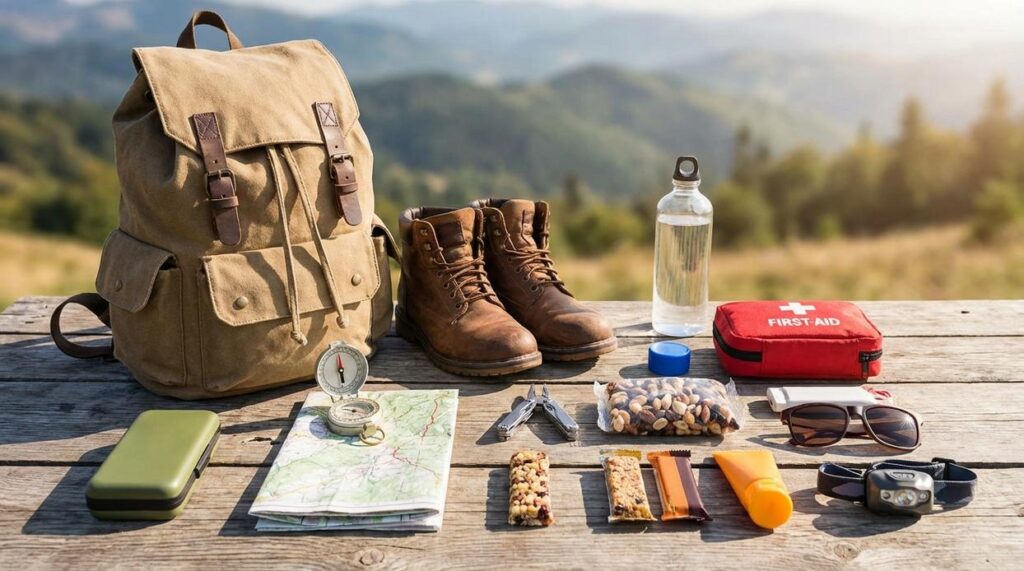
Preparation isn’t just smart—it’s what turns a tough trek into a confident, high-reward adventure. When you’re tackling mountain hiking trails, the right gear directly impacts your comfort, safety, and stamina.
1. The Layering System Explained
First, understand layering—a clothing strategy built around three parts:
- Base layer: Moisture-wicking fabric worn against your skin to pull sweat away (think of it as climate control).
- Mid layer: Insulation like fleece or down that traps body heat.
- Shell layer: A waterproof, windproof barrier against rain and alpine gusts.
Because temperatures can swing 20–30°F in a single day at altitude (National Park Service), layering keeps you adaptable. The payoff? You stay dry, regulate body temperature, and avoid exhaustion from overheating or chills.
2. Footwear Fundamentals
Next, choose footwear based on terrain:
- Trail runners: Lightweight and breathable—ideal for dry, well-maintained paths.
- Hiking shoes: More support and grip for rocky or uneven ground.
- Hiking boots: Ankle stability and durability for muddy, snow-covered, or rugged alpine routes.
While some argue boots are always best, lighter shoes reduce fatigue over long distances (American Council on Exercise). The benefit: more energy left for the summit push.
3. Navigation Tools (Redundancy Wins)
Technology fails. Batteries die. Therefore, pair a GPS app (with a power bank) alongside a physical map and compass. Redundancy means fewer wrong turns—and fewer epic “how did we get here?” moments.
4. The Ten Essentials, Adapted for Altitude
- Navigation tools
- Extra water
- Extra calories (higher burn rate at elevation)
- Sun protection (UV increases ~10% per 1,000 meters, EPA)
- Insulation layers
- Illumination
- First-aid kit
- Fire starter
- Repair kit
- Emergency shelter
Ultimately, the right kit doesn’t just prepare you—it empowers you to hike stronger, safer, and longer.
Mountain Safety Essentials: Weather, Wildlife, and Altitude
Mountains are beautiful, but they are not forgiving. Conditions shift fast, wildlife is unpredictable, and altitude affects everyone differently. So, let’s focus on what you should actually do to stay safe.
Mastering Mountain Weather
First, understand microclimates. A microclimate is a small area where weather differs from the surrounding region due to elevation, terrain, or sun exposure (National Weather Service). In other words, the forecast for the nearby town may be completely wrong for your trail.
Therefore, always check mountain-specific forecasts and start early. Afternoon thunderstorms are common in higher elevations, especially in summer. Lightning risk increases above treeline, so plan to summit before noon and descend early. Pro tip: if clouds build quickly or you hear thunder, turn around immediately.
Altitude Sickness 101
Acute Mountain Sickness (AMS) can begin above 8,000 feet (CDC). Symptoms include headache, nausea, dizziness, and fatigue. If you feel unwell, do not ascend further. That rule is non-negotiable.
Instead, acclimatize gradually, drink plenty of water, and gain elevation slowly. If symptoms worsen, descend. Pushing through may sound heroic, but it’s reckless.
Wildlife Encounters
On mountain hiking trails, you may encounter bears, moose, or mountain goats. Prevention is key. Make noise while hiking, store food securely, and observe from a safe distance. Never approach wildlife for photos (this isn’t a nature documentary audition).
Creating a Trip Plan
Finally, leave a detailed trip plan with a trusted contact. Include your exact route, planned return time, vehicle location, and emergency numbers. Better yet, start with shorter outings like weekend microadventures you can take close to home before tackling remote terrain.
Trail etiquette starts with the Leave No Trace principles: plan ahead, travel on durable surfaces, dispose of waste properly, leave what you find, minimize campfire impact, respect wildlife, and be considerate of others. A ranger once told me, “Pack out everything—yes, even banana peels.” On mountain hiking trails, yield to uphill hikers; they have momentum. When passing, communicate: “On your left?” and wait for a clear reply. Counterpoint: some argue organic scraps biodegrade, but wildlife learns bad habits. Near cultural sites, pause. “These stones are sacred,” a local guide said. Don’t touch, don’t stack, don’t pocket history. Wilderness remembers respect.
From trailhead to summit, you now have the core knowledge to plan your first hike. The mountains can feel daunting, yet preparation consistently turns fear into excitement. According to the American Hiking Society, hikers who plan routes and check weather reports significantly reduce risk. In fact, search-and-rescue data shows poor planning is a leading cause of incidents. So, take a methodical approach to mapping, gear, and safety. Start small, choose well-documented mountain hiking trails, and apply these principles. With each prepared step, confidence builds, momentum follows, and the summit feels possible. Adventure truly awaits. Now lace up and begin today.
Ready to Explore Mountain Hiking Trails with Confidence
You came here looking for clarity on how to plan smarter, travel safer, and make the most of your next adventure — and now you have the insights to do exactly that. From practical preparation tips to cultural awareness and safety essentials, you’re better equipped to turn uncertainty into excitement.
Too many travelers set out unprepared, miss hidden gems, or cut their trips short because they didn’t have the right guidance. That frustration ends here. With the right planning and local insight, mountain hiking trails become unforgettable journeys instead of exhausting guesswork.
Now it’s your move. Start mapping your next route, double-check your gear, and use trusted travel insights to guide every step. Join thousands of smart explorers who rely on proven tips and up-to-date travel advice to avoid costly mistakes and travel with confidence. Don’t just dream about the adventure — plan it right and make it happen today.

 Patrick Crockerivers writes the kind of travel buzz content that people actually send to each other. Not because it's flashy or controversial, but because it's the sort of thing where you read it and immediately think of three people who need to see it. Patrick has a talent for identifying the questions that a lot of people have but haven't quite figured out how to articulate yet — and then answering them properly.
They covers a lot of ground: Travel Buzz, Packing and Safety Essentials, Cultural Destinations and Experiences, and plenty of adjacent territory that doesn't always get treated with the same seriousness. The consistency across all of it is a certain kind of respect for the reader. Patrick doesn't assume people are stupid, and they doesn't assume they know everything either. They writes for someone who is genuinely trying to figure something out — because that's usually who's actually reading. That assumption shapes everything from how they structures an explanation to how much background they includes before getting to the point.
Beyond the practical stuff, there's something in Patrick's writing that reflects a real investment in the subject — not performed enthusiasm, but the kind of sustained interest that produces insight over time. They has been paying attention to travel buzz long enough that they notices things a more casual observer would miss. That depth shows up in the work in ways that are hard to fake.
Patrick Crockerivers writes the kind of travel buzz content that people actually send to each other. Not because it's flashy or controversial, but because it's the sort of thing where you read it and immediately think of three people who need to see it. Patrick has a talent for identifying the questions that a lot of people have but haven't quite figured out how to articulate yet — and then answering them properly.
They covers a lot of ground: Travel Buzz, Packing and Safety Essentials, Cultural Destinations and Experiences, and plenty of adjacent territory that doesn't always get treated with the same seriousness. The consistency across all of it is a certain kind of respect for the reader. Patrick doesn't assume people are stupid, and they doesn't assume they know everything either. They writes for someone who is genuinely trying to figure something out — because that's usually who's actually reading. That assumption shapes everything from how they structures an explanation to how much background they includes before getting to the point.
Beyond the practical stuff, there's something in Patrick's writing that reflects a real investment in the subject — not performed enthusiasm, but the kind of sustained interest that produces insight over time. They has been paying attention to travel buzz long enough that they notices things a more casual observer would miss. That depth shows up in the work in ways that are hard to fake.