

Planning an international trip is exciting—but staying healthy while you travel is just as important as choosing the perfect destination. If you’re searching for clear, reliable guidance on international travel health precautions, you likely want practical steps that will protect you before, during, and after your journey. This article is designed to give you exactly that: straightforward advice, essential preparation tips, and on-the-ground safety insights to help you travel with confidence.
From recommended vaccinations and travel insurance considerations to food safety, water precautions, and managing health risks abroad, we break down what truly matters. We draw on up-to-date global health recommendations, travel safety data, and real-world travel planning expertise to ensure the information you’re reading is accurate and actionable.
Whether you’re heading out for a short getaway or an extended overseas adventure, this guide will help you minimize risks, avoid common health pitfalls, and focus on what really matters—enjoying your trip.
International travel is electric—the countdown, the packed bags, the promise of discovery. Yet beneath the excitement lurks a quiet fear: getting sick miles from home. A single preventable illness can derail a dream itinerary and drain your budget FAST. Many travelers assume spontaneity is part of the adventure; I disagree. Winging your health plan is not brave, it’s careless. This guide delivers a clear, step-by-step checklist built on medical guidance and real-world lessons, covering international travel health precautions before departure, smart habits abroad, and recovery steps after return. Think of it as your preflight safety briefing—boring, maybe, but essential truly.
Before You Go: Your Pre-Travel Health Checklist
Travel is exciting. Getting sick abroad? Not so much. A little preparation delivers big benefits: fewer surprises, lower costs, and real peace of mind when you’re far from home.
1. Consult a Healthcare Professional
Book a visit with your doctor or a travel clinic 4–6 weeks before departure. This window allows time for required vaccines like Hepatitis A or Typhoid to become effective. According to the CDC, some vaccines require multiple doses over weeks (CDC Travelers’ Health). You’ll also learn about destination-specific risks such as malaria or yellow fever.
The payoff? Confidence and protection. Instead of Googling symptoms in a hotel room at midnight, you’ll know you’re covered. (Future you will be grateful.)
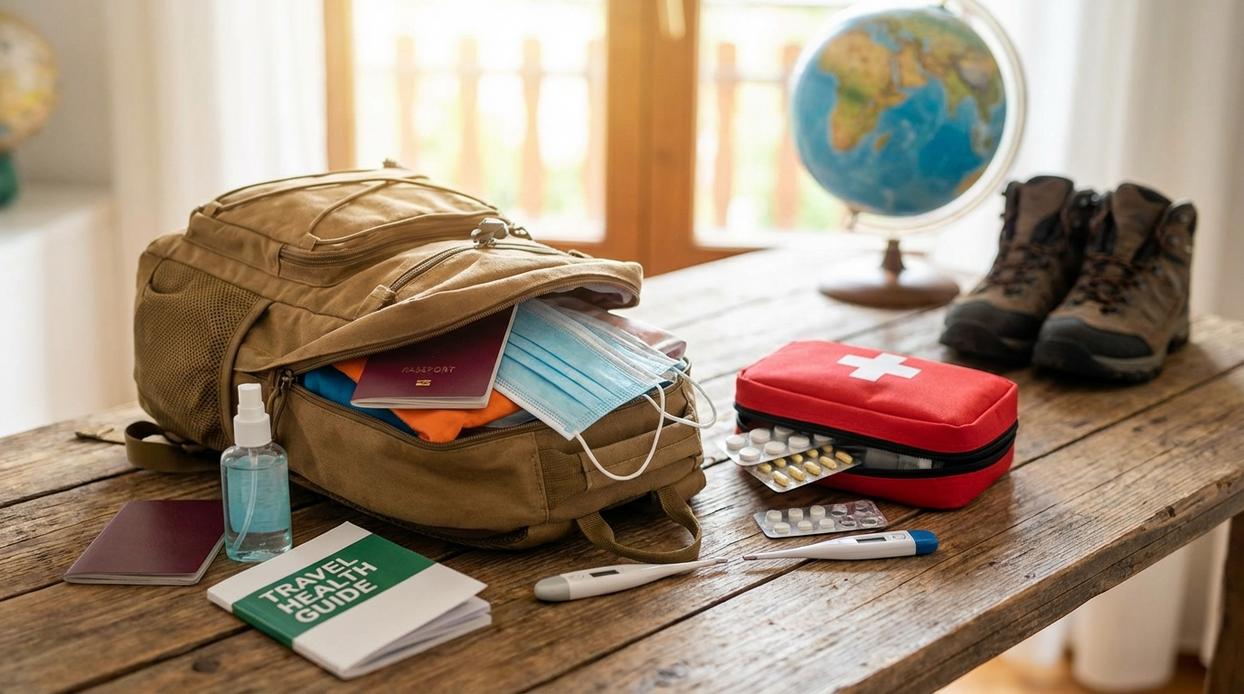
2. Assemble a Custom Travel Health Kit
Think beyond bandages. Pack:
- Prescription medications in original packaging
- Pain relievers and antihistamines
- Antiseptic wipes and adhesive bandages
- Insect repellent with DEET or Picaridin
- Broad-spectrum sunscreen
- Anti-diarrheal medication
This small kit can save you hours searching foreign pharmacies—or navigating language barriers. Pro tip: keep medications in your carry-on in case of lost luggage.
3. Secure Comprehensive Travel Insurance
Many domestic health plans offer limited or no international coverage (U.S. Department of State). A policy covering emergency medical expenses and evacuation protects both your health and your wallet.
4. Research Destination-Specific Advisories
Check official updates for outbreaks, food and water safety, and international travel health precautions. Reliable sources like the CDC provide current alerts and recommendations.
The benefit? You travel smarter, safer, and with fewer “I wish I’d known” moments—so your memories are about adventures, not ailments.
Staying Well at 30,000 Feet: In-Flight and Transit Tips
Cabin air is notoriously dry—often below 20% humidity, drier than most deserts (yes, really). Low humidity accelerates fluid loss through breathing and skin, which is why you feel parched mid-flight. PRIORITIZE HYDRATION. Drink water consistently and limit alcohol and caffeine, both mild diuretics that can worsen dehydration.
Long-haul flights also raise the risk of Deep Vein Thrombosis (DVT)—a blood clot that forms in deep veins, usually in the legs. According to the CDC, risk increases on flights over four hours. Reduce that risk with simple habits:
- Flex and point your ankles every 30 minutes
- Stand or walk the aisle when safe
- Wear graduated compression socks
(Pro tip: choose an aisle seat if circulation is a concern.)
Jet lag—your body clock out of sync with local time—can derail your first days abroad. Gradually shift your sleep schedule before departure, hydrate well, and seek natural sunlight on arrival to reset circadian rhythms.
Airports are microbial crossroads. Maintain hygiene by sanitizing hands, wiping tray tables, and considering a mask in crowded terminals. Thoughtful packing helps—see the ultimate travel packing checklist for any destination: https://lwmftravel.net/the-ultimate-travel-packing-checklist-for-any-destination/. Smart preparation supports stronger international travel health precautions overall.
Navigating Your Destination: Food, Water, and Environmental Safety
Staying healthy abroad isn’t about paranoia—it’s about preparation. While many guides skim the surface, seasoned travelers know that small daily choices make the biggest difference. Let’s break it down practically.
1. Practice Smart Food Safety
First and foremost, follow the classic rule: Boil it, cook it, peel it, or forget it. That means steaming street dumplings? Yes. Raw garnish sitting in the sun? Maybe not. Choose busy food stalls where turnover is high and meals are cooked fresh (a long local line is usually a good sign). Avoid raw or undercooked meats, unpasteurized dairy, and salads washed in potentially unsafe water.
Some argue that avoiding street food means missing authentic culture. Fair point. However, smart selection—not total avoidance—is the real strategy. Anthony Bourdain ate adventurously, but even he favored freshly cooked dishes.
2. Ensure Safe Drinking Water
Next, be vigilant about hydration. Drink only sealed, bottled water, and skip ice unless you’re certain it’s purified. Use bottled water for brushing your teeth. As a backup, carry a compact filter or purification tablets—especially in remote areas. According to the CDC, contaminated water is one of the leading causes of traveler’s diarrhea worldwide.
3. Protect Yourself from Insects
Meanwhile, mosquito-borne illnesses like dengue and malaria remain risks in many regions (World Health Organization data confirms their global spread). Use EPA-approved insect repellent, wear long sleeves at dawn and dusk, and sleep under a mosquito net in high-risk zones. Pro tip: treat clothing with permethrin for added defense.
4. Guard Against Sun and Heat Exposure
Finally, sun and heat can derail your trip quickly. Apply high-SPF sunscreen, wear a wide-brimmed hat, and hydrate consistently. Heatstroke can escalate fast, particularly in humid climates.
For a deeper dive into international travel health precautions, explore this comprehensive travel safety checklist. Preparation may not be glamorous—but neither is spending your vacation recovering indoors.
Travel should be remembered for sunsets, street food, and spontaneous detours—not for a fever that could have been avoided. Proactive preparation and mindful choices are your best defense, turning potential health hiccups into non-events. After all, who wants a preventable illness to become the most memorable part of a dream trip?
Start with a simple checklist: review vaccines, pack medications, and research destination-specific international travel health precautions. Next, support your body in transit by hydrating, stretching, and resting strategically. Finally, practice smart habits on the ground—safe food choices, clean water, and situational awareness. These steps safeguard your energy, protect your budget, and preserve your itinerary.
Moreover, the payoff is confidence: you explore freely, connect deeply, and return home stronger. Once back, monitor your health; if symptoms arise, consult a doctor and mention your recent travel history. Prepared travelers bring home only memories, not medical bills. That’s the real souvenir. truly.
Ready for Safer, Smarter Adventures Abroad?
You set out to understand how to travel smarter, safer, and with more confidence—and now you have the tools to do exactly that. From planning logistics to staying aware of international travel health precautions, you’re better prepared to protect your time, money, and well-being on every journey.
Travel uncertainty is stressful. No one wants a dream trip ruined by preventable health issues, safety missteps, or overlooked details. The right preparation eliminates those risks and replaces them with confidence and excitement.
Now it’s time to take action. Review your destination requirements, double-check your international travel health precautions, secure the right insurance, and build a plan that puts safety first. For more trusted travel insights, practical planning strategies, and up-to-date safety guidance relied on by a growing community of global travelers, explore our latest resources and start planning your next adventure today.

 There is a specific skill involved in explaining something clearly — one that is completely separate from actually knowing the subject. Ozirian Velmyre has both. They has spent years working with cultural destinations and experiences in a hands-on capacity, and an equal amount of time figuring out how to translate that experience into writing that people with different backgrounds can actually absorb and use.
Ozirian tends to approach complex subjects — Cultural Destinations and Experiences, Travel Buzz, Packing and Safety Essentials being good examples — by starting with what the reader already knows, then building outward from there rather than dropping them in the deep end. It sounds like a small thing. In practice it makes a significant difference in whether someone finishes the article or abandons it halfway through. They is also good at knowing when to stop — a surprisingly underrated skill. Some writers bury useful information under so many caveats and qualifications that the point disappears. Ozirian knows where the point is and gets there without too many detours.
The practical effect of all this is that people who read Ozirian's work tend to come away actually capable of doing something with it. Not just vaguely informed — actually capable. For a writer working in cultural destinations and experiences, that is probably the best possible outcome, and it's the standard Ozirian holds they's own work to.
There is a specific skill involved in explaining something clearly — one that is completely separate from actually knowing the subject. Ozirian Velmyre has both. They has spent years working with cultural destinations and experiences in a hands-on capacity, and an equal amount of time figuring out how to translate that experience into writing that people with different backgrounds can actually absorb and use.
Ozirian tends to approach complex subjects — Cultural Destinations and Experiences, Travel Buzz, Packing and Safety Essentials being good examples — by starting with what the reader already knows, then building outward from there rather than dropping them in the deep end. It sounds like a small thing. In practice it makes a significant difference in whether someone finishes the article or abandons it halfway through. They is also good at knowing when to stop — a surprisingly underrated skill. Some writers bury useful information under so many caveats and qualifications that the point disappears. Ozirian knows where the point is and gets there without too many detours.
The practical effect of all this is that people who read Ozirian's work tend to come away actually capable of doing something with it. Not just vaguely informed — actually capable. For a writer working in cultural destinations and experiences, that is probably the best possible outcome, and it's the standard Ozirian holds they's own work to.