
If you’re searching for lesser-known destinations beyond South America’s headline capitals, this guide is built for you. Travelers today want more than crowded landmarks—they want authentic culture, local flavor, and practical advice that makes exploring small cities both exciting and safe. This article highlights emerging small-city destinations across South America, shares essential planning tips, and uncovers local experiences that most guidebooks overlook.
We’ve carefully researched travel trends, reviewed on-the-ground insights, and analyzed up-to-date safety guidance to ensure the recommendations here are accurate and relevant. From cultural traditions and neighborhood gems to transportation logistics and seasonal considerations, you’ll find clear, actionable information designed to help you plan smarter.
Whether you’re looking for vibrant street life, hidden culinary scenes, or off-the-beaten-path adventure, this guide will help you discover where to go, what to expect, and how to make the most of your journey with confidence.
Rio dazzles. Machu Picchu awes. But after my third shoulder-to-shoulder sunset in Cusco, I craved something different. Over-tourism turns discovery into a queue.
So instead, I followed a bus driver’s tip to Cuenca and later wandered Valdivia’s river markets at dawn. These small cities in south america pulse with everyday rituals—maté shared on stoops, impromptu cumbia in plazas, murals that tell political histories (the kind guidebooks footnote).
This guide curates lesser-known urban gems where authenticity isn’t staged. Along the way I’ll share tips, safety notes, and haunts gathered from months on the ground—so you can skip crowds and find stories.
Cali, Colombia: The World’s Salsa Capital
Often overshadowed by Medellín and Bogotá, Cali feels like Colombia turned up to full volume. It’s raw, rhythmic, and deeply rooted in Afro-Colombian heritage. A local dancer told me, “In Cali, you don’t learn salsa. You live it.” After one night in Juanchito, I understood.
Step into a salsateca and the bass hums through your ribs. Couples spin at lightning speed while newcomers cling to the beat (we’ve all been there). During a beginner’s class, my instructor laughed, “Relax your shoulders—salsa isn’t a math test.” By the end, even the shy travelers were grinning.
By day, wander San Antonio’s colonial streets—whitewashed walls, wrought-iron balconies, and murals that tell stories of resilience. It’s quieter, reflective, almost a contrast to the city’s nocturnal pulse.
For adventure, hike Cerro de las Tres Cruces. The climb is sweaty but worth it for sweeping city views. Or take a day trip to San Cipriano Natural Reserve and float downriver on an inner tube beneath jungle canopy (nature’s lazy river, basically).
- For safe nightlife, stick to Granada, El Peñón, and San Antonio after dark.
Pro tip: Cali truly wakes up at night. As one bartender said, “Daytime is rehearsal. Nighttime is the show.” Compared to small cities in south america, Cali doesn’t whisper—it sings.
Cuenca, Ecuador: Colonial Charm in the Andes
While many travelers rush to Quito, Cuenca feels like Ecuador’s well-kept secret. This UNESCO World Heritage city is defined by cobblestone lanes, wrought-iron balconies, and cathedral domes tiled in blue. It’s the kind of place where you can walk everywhere (no honking taxis required) and still stumble onto something remarkable. In a region often compared to other small cities in south america, Cuenca stands out for its preservation and polish.
Stroll along the Tomebamba River at golden hour, when locals jog the paved promenade and church bells echo across the water. Tour a Panama hat factory—yes, they originated here, woven from toquilla straw—then dive into Mercado 10 de Agosto for hornado, fresh jugo, and the hum of everyday life. The market’s upper food court is where vendors actually eat (always a good sign).
• Day trip to Cajas National Park for high-altitude trekking among glacial lakes and páramo grasslands.
• Visit Gualaceo for textiles and Chordeleg for filigree jewelry workshops.
Some argue Cuenca is “too sleepy.” Fair—but that calm fuels its café culture and surprisingly strong international dining scene, thanks to a thriving expat community. It’s a comfortable, culture-rich base for Andean exploration.
Sucre, Bolivia: The White City of the Americas
Ever notice how travelers rave about La Paz or the Uyuni Salt Flats, then completely skip Sucre? It’s frustrating. As Bolivia’s constitutional capital, Sucre quietly holds the country’s most elegant colonial architecture and a relaxed, scholarly vibe—yet it’s treated like a layover. This is a mistake.
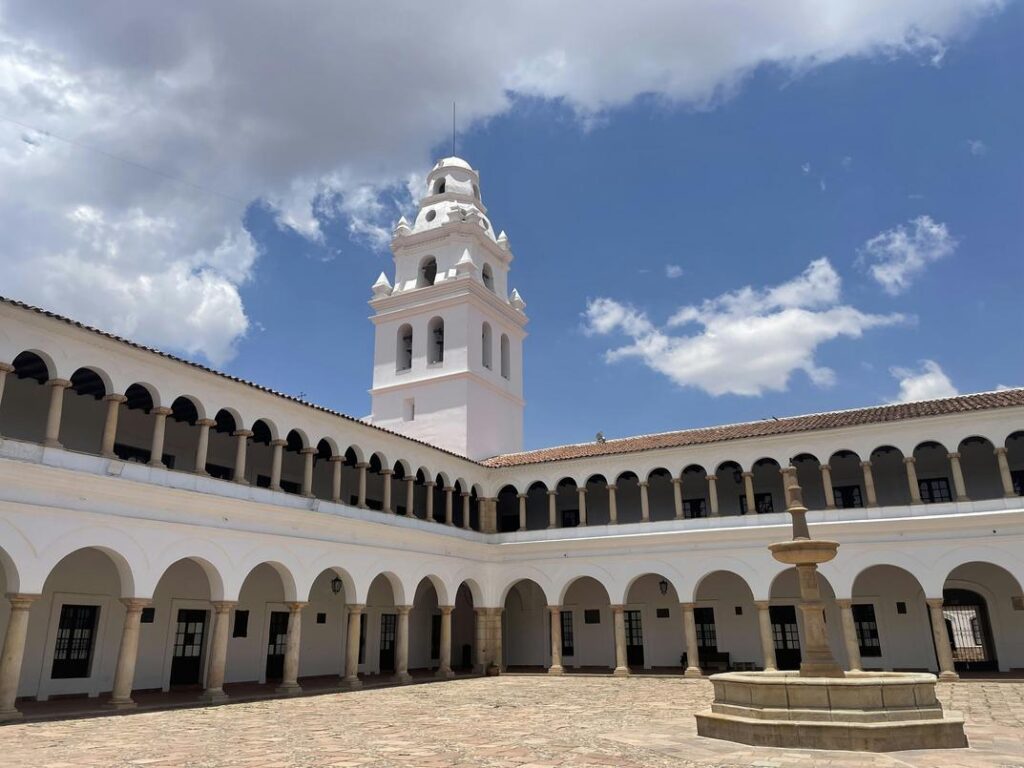
Whitewashed buildings glow under a mild Andean sun, giving Sucre its nickname, “The White City.” Compared to the chaotic buzz of higher-altitude cities, it feels breathable (literally and figuratively). At 2,800 meters, it’s lower than La Paz, making it ideal for acclimatizing without the pounding altitude headaches many travelers dread.
Culturally, it delivers. Casa de la Libertad marks where Bolivia declared independence in 1825. The ASUR Museum showcases intricate Indigenous textiles—visual storytelling woven in alpaca and color. And at Cal Orck’o, you’ll find thousands of preserved dinosaur footprints (yes, real Jurassic Park energy, minus the velociraptors).
For local adventure, head to Tarabuco’s Sunday Market. It’s one of the most authentic in South America, bursting with traditional Yampara dress and handmade goods—no watered-down tourist stalls.
If you’re tired of overcrowded capitals and overhyped hotspots, Sucre proves that small cities in south america can outshine the headlines—including a few underrated european towns that deserve a spot on your bucket list.
Essential Planning & Safety for Off-the-Path Travel
Exploring small cities in south america rewards you with authentic culture—but only if you plan smart.
Trip Planning Essentials
Choosing regional flights over long-distance buses can save 8–15 hours on rugged routes (IATA data shows regional carriers often reduce transit time by half). Buses are cheaper, but flights maximize vacation days. Learn basic Spanish or Portuguese phrases like “¿Cuánto cuesta?” or “Obrigado”—locals respond warmly when you try (and yes, pronunciation counts). Pack layered clothing; Andean mornings can hover near 40°F while afternoons climb above 70°F.
Pro tip: Use compression packing cubes to adapt quickly between climates.
Safety Considerations
- Use reputable ride-sharing apps instead of street taxis for tracked routes.
- Stay alert in busy markets; distraction theft is common in high-traffic areas (UNODC reports petty theft spikes in tourist hubs).
- Secure valuables with anti-theft backpacks or money belts.
Cultural Etiquette
A light handshake or cheek kiss is a standard greeting. Tipping 10% is customary in many restaurants if service isn’t included.
Health & Wellness
Carry travel insurance covering evacuation. Check CDC guidance for vaccinations like yellow fever where applicable. For altitude sickness above 8,000 feet, hydrate, ascend gradually, and rest—your body needs time to adapt.
Your next trip doesn’t have to look like everyone else’s. Rio vs. Cali. Cusco vs. Cuenca. One offers packed viewpoints and predictable itineraries; the other delivers salsa-filled nights, colonial plazas, and conversations that stretch past midnight. The true soul of the continent often lives in small cities in south america—places where markets buzz louder than tour buses. Yes, big-name capitals promise icons; smaller hubs promise intimacy, affordability, and stories you’ll own. If crowds exhaust you, choose character over checklists. Start with this guide, explore what excites you most, and map out your own unforgettable urban escape today. Discover here.
Ready to Explore Beyond the Obvious
You set out to discover whether small cities in south america are truly worth adding to your travel plans—and now you know they are. From authentic cultural encounters to lesser‑known adventure spots and practical safety insights, you have a clearer path to planning a trip that’s unique, meaningful, and far from ordinary.
The truth is, overcrowded tourist hubs can drain your budget and your energy. What most travelers really want is connection, affordability, and unforgettable local experiences—and that’s exactly what these destinations deliver.
Now it’s your move. Start mapping out your route, lock in your accommodations early, and use trusted travel insights to plan smarter and safer. Join thousands of savvy travelers who rely on our up‑to‑date travel buzz, expert trip planning tips, and local highlights to avoid costly mistakes and uncover hidden gems.
Don’t settle for the same trip everyone else is taking. Plan your journey to small cities in south america today—and experience the culture, adventure, and authenticity you’ve been craving.

 There is a specific skill involved in explaining something clearly — one that is completely separate from actually knowing the subject. Ozirian Velmyre has both. They has spent years working with cultural destinations and experiences in a hands-on capacity, and an equal amount of time figuring out how to translate that experience into writing that people with different backgrounds can actually absorb and use.
Ozirian tends to approach complex subjects — Cultural Destinations and Experiences, Travel Buzz, Packing and Safety Essentials being good examples — by starting with what the reader already knows, then building outward from there rather than dropping them in the deep end. It sounds like a small thing. In practice it makes a significant difference in whether someone finishes the article or abandons it halfway through. They is also good at knowing when to stop — a surprisingly underrated skill. Some writers bury useful information under so many caveats and qualifications that the point disappears. Ozirian knows where the point is and gets there without too many detours.
The practical effect of all this is that people who read Ozirian's work tend to come away actually capable of doing something with it. Not just vaguely informed — actually capable. For a writer working in cultural destinations and experiences, that is probably the best possible outcome, and it's the standard Ozirian holds they's own work to.
There is a specific skill involved in explaining something clearly — one that is completely separate from actually knowing the subject. Ozirian Velmyre has both. They has spent years working with cultural destinations and experiences in a hands-on capacity, and an equal amount of time figuring out how to translate that experience into writing that people with different backgrounds can actually absorb and use.
Ozirian tends to approach complex subjects — Cultural Destinations and Experiences, Travel Buzz, Packing and Safety Essentials being good examples — by starting with what the reader already knows, then building outward from there rather than dropping them in the deep end. It sounds like a small thing. In practice it makes a significant difference in whether someone finishes the article or abandons it halfway through. They is also good at knowing when to stop — a surprisingly underrated skill. Some writers bury useful information under so many caveats and qualifications that the point disappears. Ozirian knows where the point is and gets there without too many detours.
The practical effect of all this is that people who read Ozirian's work tend to come away actually capable of doing something with it. Not just vaguely informed — actually capable. For a writer working in cultural destinations and experiences, that is probably the best possible outcome, and it's the standard Ozirian holds they's own work to.