
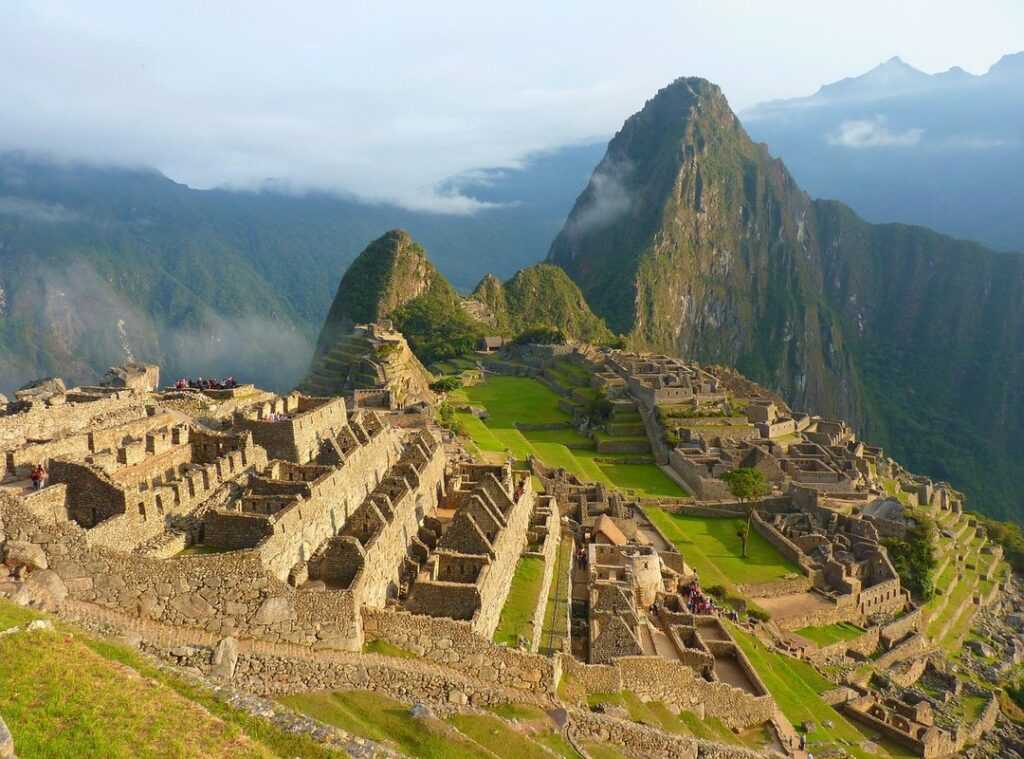
The crisp Andean air bites at your cheeks as the sun finally breaks through the mist, revealing the sun-drenched ruins of a lost city. It’s a moment that stirs something ancient inside us. Why do these stones whisper such stories?
This article takes you on a journey back in time to uncover the true story behind Machu Picchu. We’ll explore the Machu Picchu history and answer the questions echoing among its stones. My deep passion and extensive research into historical destinations promise a narrative that goes beyond dry facts, connecting you to the spirit and mystery of the Inca people.
The Royal Vision: Who Built Machu Picchu and Why?
When you think of Machu Picchu history, it all starts with Pachacuti. This Inca emperor wasn’t just your average ruler; he was a visionary. In the mid-15th century, he conjured up this stunning citadel.
But let’s get something straight. Machu Picchu wasn’t a bustling city. No, it was more like a royal retreat.
Imagine a getaway for the nobility. A place to escape from the chaos of Cusco.
Nestled between two sacred peaks, it overlooks the Urubamba River. The location wasn’t random. The Incas chose it for its strategic and spiritual significance.
Mountains were more than just landforms to them. They were sacred, almost like living beings. Nature played a massive role in Inca cosmology.
It wasn’t just scenery; it was a part of their spiritual world.
Machu Picchu wasn’t just for lounging around, though. It served a dual purpose. Ceremonies, astronomical observations, and yes, a bit of royal relaxation.
The Intihuatana stone is a perfect example. This carved stone was used to track the sun’s position. Who doesn’t want to gaze at the stars and chill in luxury?
And let’s talk about construction. No wheel, no iron tools, no mortar. Yet, they built this masterpiece.
It’s mind-blowing what they achieved. The engineering feat sets the stage for another fascinating aspect of Inca ingenuity. If you’re intrigued by ancient wonders, you might want to discover ancient ruins greece.
It’s a whole other world of ancient marvels.
Machu Picchu isn’t just a relic. It’s a the Inca’s genius and their connection with nature. It’s a slice of history that continues to captivate us.
So, next time you find yourself pondering ancient sites, remember Pachacuti and his royal vision.
A City in the Clouds: The Genius of Inca Engineering
Walking through Machu Picchu, you can’t help but marvel. How did they do it? The Incas built a city at the top of the Andes (really up there) with nothing but manpower and genius.
Their ashlar masonry is legendary. Stones fit together so perfectly, not a blade of grass can pass through. No mortar, no cement.
Just stone on stone, like a complex puzzle. It’s kept those walls standing through centuries of earthquakes.
The terraces are another wonder. Not just for show. These agricultural layers prevented erosion and created microclimates.
Imagine growing a variety of crops on a steep mountain. These terraces fed the city, a sustainable solution long before its time. The Incas didn’t just farm; they engineered their space.
It’s like they understood the mountain better than anyone else.
Water was another masterpiece. A city needs water, and Machu Picchu’s complex water system was ahead of its time. Channels and fountains brought fresh spring water from the mountains into the city.
It wasn’t just practical. It was art. The advanced hydraulic engineering is a Incan ingenuity.
It’s not a stretch to say they were the original environmental engineers.
There’s something about how the Incas built with the mountain. They didn’t bulldoze or force their way. The structures blend seamlessly with nature, making it seem like Machu Picchu grew out of the rock.
This harmony can teach us a thing or two about sustainability. The city is a living with nature, not against it.
If you’re curious about the machu picchu history, it’s worth digging into. The more you learn, the more you realize the Incas were more than just builders. They were visionaries.
The Great Abandonment: A Century of Mystery
Machu Picchu. A marvel perched high in the Andes, it was inhabited for only about 100 years before being abandoned. Why?
That’s the question that has puzzled historians for ages. Let’s clear up one thing: the Spanish conquistadors did not find it. They were too busy decimating the Inca empire elsewhere.
Its remote location kept it hidden, like a treasure locked away in plain sight.
So why did the inhabitants leave? Theories abound. The Spanish conquest wreaked havoc on the Inca empire, leading to civil war and disease.
Smallpox spread like wildfire, decimating the population and destabilizing the state. The Inca leadership crumbled, leaving Machu Picchu without purpose or support. When your leaders fall and your people are wiped out, do you really stick around a remote estate?
Consider this: with the empire collapsing, supply lines probably ran dry. No supplies, no purpose. A royal retreat like Machu Picchu becomes untenable.
You’d leave too if your food and security vanished overnight. I can’t blame them.
But let’s not romanticize the idea that this place was “lost.” Locals always knew it was there. The jungle just slowly reclaimed it, veiling its grandeur from the outside world. It’s like a forgotten relic, a monument to a time when the Inca ruled.
Its history is rich, complex, and yes, a bit tragic. Speaking of rich history, if travel and culture intrigue you, check out this art french cuisine culinary journey. It’s a different kind of exploration but equally captivating.
In the end, Machu Picchu history isn’t just about abandonment. It’s about survival, mystery, and the echoes of an empire now lost to time.
Rediscovery: Machu Picchu’s Hidden Story
Hiram Bingham wasn’t just any explorer. In 1911, backed by Yale University, he ventured into the heart of Peru. Imagine stumbling upon a city like Machu Picchu, hidden under vines and fog.
Local farmers (the unsung heroes) led him there, revealing a secret they’d kept for generations. I mean, who wouldn’t be astonished?
Bingham’s own words convey his awe. He described it as a city “hidden by nature.” The sight of its steep terraces and stone structures left him speechless. That’s not something you just walk away from.
His discovery wasn’t just a personal triumph. Bingham’s articles, especially that iconic National Geographic issue, thrust Machu Picchu into the global spotlight. Suddenly, this place wasn’t just a local marvel; it was a world wonder.
That’s how Machu Picchu history unfolded to the world.
But let’s not forget the locals. Their knowledge was the real key to the city’s rediscovery. Without them, Bingham might have wandered forever.
So next time you see those stunning photos, remember: it was a partnership.
Machu Picchu isn’t just a site; it’s a human curiosity and collaboration. What’s next? Maybe we need to look closer at what other secrets the world holds.
Discover the Secrets in the Stones
Machu Picchu isn’t just an ancient site. It’s a living a royal vision that was lost and found again. Understanding Machu Picchu history transforms a visit from mere sightseeing into a deep connection with a civilization lost in time.
Walking the ruins, you feel the genius and enduring strength of the Inca legacy.
So why just read about it? Experience its history firsthand. Plan your own journey to this city in the clouds.
Don’t just see it. Live it. Visit lwmftravel.net for tips and make your trip unforgettable.
The stones have stories. Are you ready to listen?

 There is a specific skill involved in explaining something clearly — one that is completely separate from actually knowing the subject. Ozirian Velmyre has both. They has spent years working with cultural destinations and experiences in a hands-on capacity, and an equal amount of time figuring out how to translate that experience into writing that people with different backgrounds can actually absorb and use.
Ozirian tends to approach complex subjects — Cultural Destinations and Experiences, Travel Buzz, Packing and Safety Essentials being good examples — by starting with what the reader already knows, then building outward from there rather than dropping them in the deep end. It sounds like a small thing. In practice it makes a significant difference in whether someone finishes the article or abandons it halfway through. They is also good at knowing when to stop — a surprisingly underrated skill. Some writers bury useful information under so many caveats and qualifications that the point disappears. Ozirian knows where the point is and gets there without too many detours.
The practical effect of all this is that people who read Ozirian's work tend to come away actually capable of doing something with it. Not just vaguely informed — actually capable. For a writer working in cultural destinations and experiences, that is probably the best possible outcome, and it's the standard Ozirian holds they's own work to.
There is a specific skill involved in explaining something clearly — one that is completely separate from actually knowing the subject. Ozirian Velmyre has both. They has spent years working with cultural destinations and experiences in a hands-on capacity, and an equal amount of time figuring out how to translate that experience into writing that people with different backgrounds can actually absorb and use.
Ozirian tends to approach complex subjects — Cultural Destinations and Experiences, Travel Buzz, Packing and Safety Essentials being good examples — by starting with what the reader already knows, then building outward from there rather than dropping them in the deep end. It sounds like a small thing. In practice it makes a significant difference in whether someone finishes the article or abandons it halfway through. They is also good at knowing when to stop — a surprisingly underrated skill. Some writers bury useful information under so many caveats and qualifications that the point disappears. Ozirian knows where the point is and gets there without too many detours.
The practical effect of all this is that people who read Ozirian's work tend to come away actually capable of doing something with it. Not just vaguely informed — actually capable. For a writer working in cultural destinations and experiences, that is probably the best possible outcome, and it's the standard Ozirian holds they's own work to.