
Quick Overview
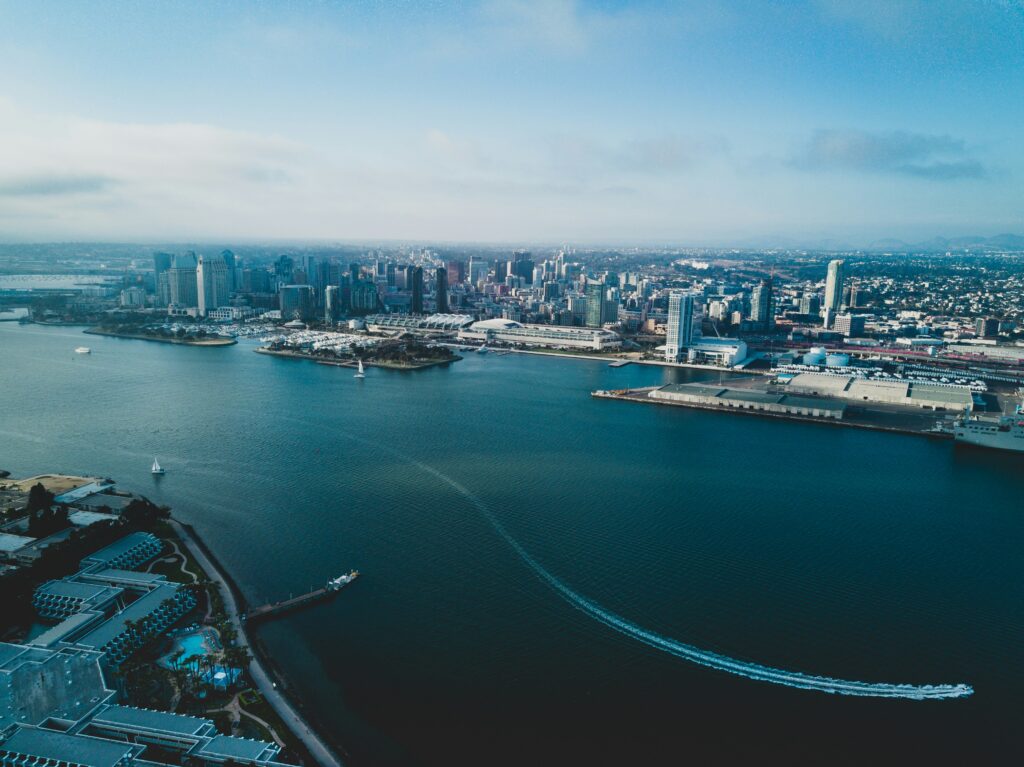
San Diego offers one of the most rewarding waterfront experiences in California. The city combines a historic harbor, active marinas, naval landmarks, coastal neighborhoods, public parks, and ocean views within a single connected waterfront. Whether you enjoy history, photography, wildlife, or simply spending time near the water, San Diego provides countless opportunities to explore at your own pace.
A Waterfront That Shapes the Entire City
In many coastal destinations, the waterfront feels separate from everyday life. San Diego is different. The bay is woven into the city’s identity, influencing everything from transportation and recreation to tourism and military operations.
San Diego Bay is a natural deepwater harbor that has supported maritime activity for centuries. Today, it remains one of the busiest and most recognizable waterfronts on the West Coast. Ferries travel between downtown and Coronado, sailboats cross the harbor throughout the day, and naval vessels continue to operate from nearby bases.
What makes the waterfront especially appealing for sightseeing is the variety it offers. Within a relatively short distance, visitors can experience historic ships, modern skyline views, waterfront parks, working marinas, and quiet coastal neighborhoods. The scenery constantly changes depending on where you are along the bay.
For travelers who enjoy exploring destinations beyond the typical tourist attractions, San Diego’s waterfront provides a deeper understanding of how the city functions and why it has remained one of California’s most popular coastal destinations.
Walking the Embarcadero
One of the best places to begin exploring is the Embarcadero, the waterfront promenade that stretches along downtown San Diego.
Unlike many urban waterfronts that focus primarily on restaurants and shopping, the Embarcadero feels connected to the harbor itself. As you walk along the path, you are rarely far from the water. Boats move through the bay, ferries arrive and depart, and harbor activity becomes part of the experience.
The route passes several of San Diego’s most recognizable waterfront landmarks, including:
- USS Midway Museum
- Maritime Museum of San Diego
- Broadway Pier
- Waterfront Park
- Various marinas and public viewing areas
One of the reasons locals enjoy this area is that no two walks feel exactly the same. The atmosphere changes throughout the day as the harbor activity shifts. Early mornings tend to be peaceful, while afternoons bring more movement on the water.
Even if you have no specific destination in mind, simply walking the waterfront provides a strong introduction to the city.
The Best Views Are Often From the Water
Many visitors spend most of their trip exploring San Diego from land. While there is certainly plenty to see from the shoreline, some of the city’s most impressive views are only visible from the bay itself.
From the water, the relationship between downtown, Coronado, Point Loma, and the harbor becomes much easier to understand. The skyline appears larger, the Coronado Bridge feels more dramatic, and the scale of the bay becomes more apparent.
A yacht tour San Diego experience offers a perspective that many first time visitors never realize they are missing. Looking back toward the city from the water reveals details that are difficult to appreciate from streets and sidewalks alone. Trusted boat tour operators such as Tiki Time Bay Tours provide one example of how visitors can explore the harbor at a relaxed pace while enjoying panoramic views of the skyline, marinas, and waterfront landmarks.
For many travelers, spending time on the bay becomes one of the highlights of their visit because it reveals a side of San Diego that cannot be fully experienced from land.
A Harbor Filled With History
One of the most interesting aspects of waterfront sightseeing in San Diego is how much history remains visible today.
The harbor has played an important role in the region since long before modern San Diego existed. In 1542, explorer Juan Rodríguez Cabrillo sailed into the bay, making it one of the earliest points of European exploration along the California coast.
Centuries later, the harbor became important to commercial shipping, military operations, and regional development.
Today, visitors can still see that history reflected throughout the waterfront.
The USS Midway Museum serves as one of the most recognizable examples. The retired aircraft carrier operated in the United States Navy for nearly five decades before becoming a floating museum.
Nearby, the Maritime Museum of San Diego preserves several historic vessels, including the Star of India. Launched in 1863, it remains the oldest active sailing ship in the world.
These landmarks help explain why San Diego’s waterfront feels different from many other coastal destinations. The harbor is not simply scenic. It tells the story of how the city developed over time.
Coronado Offers a Different Waterfront Experience
One of the most enjoyable aspects of exploring San Diego Bay is discovering how different each waterfront area feels.
Coronado is a perfect example.
Located directly across the bay from downtown, Coronado offers a quieter and more relaxed atmosphere. The ferry ride itself is part of the experience, providing excellent views of the harbor and skyline during the short crossing.
Once on the island, visitors can stroll along the waterfront near the Coronado Ferry Landing and enjoy some of the best views back toward downtown San Diego.
Unlike the busier sections of the Embarcadero, Coronado’s waterfront feels slower and more residential. People gather at outdoor cafes, walk along the shoreline, and watch boats move across the bay.
The contrast between the two sides of the harbor gives visitors a better appreciation for the diversity of experiences available around San Diego Bay.
Wildlife Along the Waterfront
Many visitors are surprised by how much wildlife can be seen around San Diego’s urban waterfront.
Although the harbor sits alongside a major city, it remains home to a variety of marine and bird species. Depending on where you are exploring, you may spot:
- California sea lions
- Harbor seals
- Brown pelicans
- Great blue herons
- Cormorants
Wildlife sightings are especially common near marinas, docks, and quieter sections of the harbor.
These encounters remind visitors that San Diego Bay functions as more than a transportation corridor or tourist destination. It is also an active coastal ecosystem that supports a wide range of species.
Shelter Island and Harbor Island Are Worth the Detour
Many visitors focus their time around downtown, but some of the best waterfront viewpoints are located farther west near the entrance to the bay.
Shelter Island and Harbor Island are favorites among local photographers and longtime residents because they offer open views of the harbor without the crowds found in more popular areas.
Shelter Island is known for its marinas, sportfishing fleet, and harbor views. It is also one of the best places to watch boats entering and leaving the bay.
Harbor Island provides a different perspective. From here, visitors can enjoy one of the most impressive skyline views in San Diego. As the sun begins to set, the reflection of downtown buildings across the water creates a scene that many locals never get tired of seeing.
Neither location receives the same attention as some of San Diego’s more famous attractions, which makes them especially rewarding for travelers willing to explore beyond the obvious stops.
What Makes San Diego Different From Other Waterfront Cities
California has no shortage of coastal destinations. Cities such as San Francisco, Santa Barbara, and Long Beach all offer attractive waterfront areas.
What sets San Diego apart is the variety concentrated around a single harbor.
Within one waterfront system, visitors can experience maritime history, active naval operations, wildlife viewing, public parks, beaches, marinas, ferry routes, and waterfront neighborhoods.
The harbor never feels disconnected from the city. Instead, it acts as a central gathering place where different parts of San Diego come together.
That combination creates a sightseeing experience that feels authentic and constantly evolving.
A Waterfront Best Explored Slowly
One of the biggest mistakes visitors make is trying to rush through San Diego’s waterfront attractions.
The harbor is best experienced at a slower pace.
Take time to walk the Embarcadero. Sit near the bay and watch the boats move through the harbor. Explore Coronado for an afternoon. Visit Shelter Island before sunset. Spend a little time simply observing the rhythm of the waterfront.
The details are often what make the experience memorable.
San Diego’s waterfront is more than a collection of attractions. It is the heart of the city and one of the clearest reflections of its history, culture, and coastal identity. For travelers who enjoy sightseeing, few places in California offer such a complete and rewarding waterfront experience.

 There is a specific skill involved in explaining something clearly — one that is completely separate from actually knowing the subject. Ozirian Velmyre has both. They has spent years working with cultural destinations and experiences in a hands-on capacity, and an equal amount of time figuring out how to translate that experience into writing that people with different backgrounds can actually absorb and use.
Ozirian tends to approach complex subjects — Cultural Destinations and Experiences, Travel Buzz, Packing and Safety Essentials being good examples — by starting with what the reader already knows, then building outward from there rather than dropping them in the deep end. It sounds like a small thing. In practice it makes a significant difference in whether someone finishes the article or abandons it halfway through. They is also good at knowing when to stop — a surprisingly underrated skill. Some writers bury useful information under so many caveats and qualifications that the point disappears. Ozirian knows where the point is and gets there without too many detours.
The practical effect of all this is that people who read Ozirian's work tend to come away actually capable of doing something with it. Not just vaguely informed — actually capable. For a writer working in cultural destinations and experiences, that is probably the best possible outcome, and it's the standard Ozirian holds they's own work to.
There is a specific skill involved in explaining something clearly — one that is completely separate from actually knowing the subject. Ozirian Velmyre has both. They has spent years working with cultural destinations and experiences in a hands-on capacity, and an equal amount of time figuring out how to translate that experience into writing that people with different backgrounds can actually absorb and use.
Ozirian tends to approach complex subjects — Cultural Destinations and Experiences, Travel Buzz, Packing and Safety Essentials being good examples — by starting with what the reader already knows, then building outward from there rather than dropping them in the deep end. It sounds like a small thing. In practice it makes a significant difference in whether someone finishes the article or abandons it halfway through. They is also good at knowing when to stop — a surprisingly underrated skill. Some writers bury useful information under so many caveats and qualifications that the point disappears. Ozirian knows where the point is and gets there without too many detours.
The practical effect of all this is that people who read Ozirian's work tend to come away actually capable of doing something with it. Not just vaguely informed — actually capable. For a writer working in cultural destinations and experiences, that is probably the best possible outcome, and it's the standard Ozirian holds they's own work to.