

Planning a trip today can feel overwhelming—too many destinations, too many opinions, and not enough clear guidance you can trust. If you’re searching for practical travel tips, cultural insights, and local adventure highlights that actually help you plan smarter, you’re in the right place. This article is designed to cut through the noise and give you actionable advice you can use immediately, whether you’re mapping out a weekend escape or building a flexible travel itinerary for a longer journey.
We’ve analyzed current travel trends, reviewed safety recommendations, and gathered on-the-ground insights from seasoned travelers to ensure the information you’re about to read is accurate, relevant, and experience-driven. Inside, you’ll find essential trip planning strategies, cultural etiquette tips to help you connect more meaningfully, and practical safety essentials to travel with confidence. Another option is taking a cruise, like a Mediterranean or Antarctica cruise, to make the trip as stress-free as possible.
If your goal is to travel smarter, experience destinations more deeply, and avoid common pitfalls, this guide will show you exactly how to do it.
What Is an Adjustable Vacation? Beyond Just “Winging It”
An adjustable vacation isn’t code for chaos. It’s a smart, adaptable framework that gives you structure without suffocation. Instead of scripting every hour, you design a flexible travel itinerary that bends when real life (or better opportunities) show up.
Key Components
- Flexible bookings: Choose hotels and transport with free cancellation. The benefit? You can pivot without paying penalties (your wallet will thank you).
- A “menu” of activities: Research options in advance, but decide in the moment based on weather, energy, or local tips.
- Pre-planned anchor points: Lock in a few must-do experiences—like a museum pass or guided hike—so the trip still has shape.
The Mindset Shift
Traditional tourists chase checklists. Flexible travelers chase experiences. One prioritizes proof (“I saw it!”), the other prioritizes presence. Think less theme park sprint, more Anthony Bourdain wandering into a side street café. The benefit? More meaningful memories, fewer rushed regrets.
The Top 4 Benefits of a Flexible Travel Plan
1. Embrace Serendipity
Research from Cornell University shows experiences—especially spontaneous ones—create longer-lasting happiness than material purchases (Gilovich et al.). A flexible travel itinerary lets you say “yes” to a street festival in Lisbon or a last-minute island boat tour in Thailand. Travelers who allow unplanned activities often report higher trip satisfaction (U.S. Travel Association). Sometimes the best memories aren’t on Google Maps (the detours make the story).
2. Eliminate Planning Burnout
Overplanning leads to decision fatigue, a psychological phenomenon identified by Dr. Roy Baumeister. Pre-booking every meal and transfer sounds efficient—but it’s exhausting.
- Fewer rigid reservations
- Less schedule anxiety
- More mental space to enjoy the moment
That breathing room matters.
3. Adapt and Overcome
Flight delays are common—over 20% of U.S. flights were delayed in 2023 (U.S. Bureau of Transportation Statistics). Weather disrupts plans daily. A flexible schedule makes pivoting easy, whether that’s swapping a beach day for a museum or catching a later train.
4. Deeper Cultural Immersion
Unstructured time encourages lingering in cafés or chatting with locals. Studies in the Journal of Travel Research link slower travel with stronger cultural connection. (Turns out, rushing isn’t immersive.)
For smarter prep before you go, review booking flights like a pro timing tools and insider tips.
How to Build Your Adaptable Itinerary: A Step-by-Step Guide
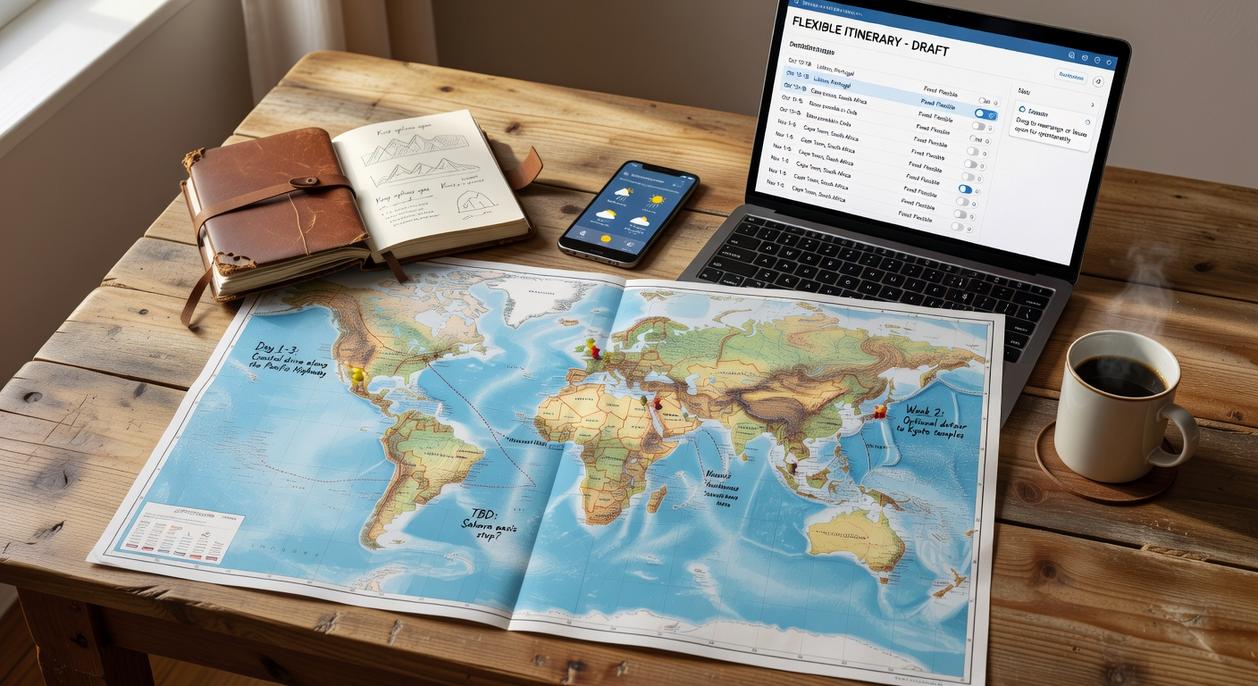
Travel rarely goes exactly as planned (and honestly, that’s part of the fun). Building a flexible travel itinerary means creating structure without suffocating spontaneity. Here’s how to do it step by step.
Step 1: Use the “Anchor Point” Strategy
An anchor point is a non‑negotiable booking—like a flight home, a wedding, or tickets to a sold‑out concert. Choose one to three anchors, then intentionally leave space between them. For example, if you’re flying into Rome and departing from Florence, lock in those flights and maybe a Vatican tour—then let the Tuscany countryside unfold naturally. This prevents overbooking while protecting what truly matters.
Step 2: Master Flexible Bookings
Look for flights labeled “refundable” or “no change fees.” Many major U.S. airlines eliminated change fees on standard economy tickets after 2020 (U.S. Department of Transportation). For accommodations, filter for “free cancellation” up to 24–48 hours before arrival. Rental cars often allow pay‑later options without penalties.
Pro tip: Screenshot cancellation policies at checkout—terms can change, and having proof saves headaches.
Step 3: Create an “Activity Menu”
Instead of planning every hour, build a categorized list: Museums, Outdoor Adventures, Food Spots, Markets, Day Trips. Think of it like a Netflix queue for your destination. If it rains, choose from Museums. Sunny? Grab a hike. Low energy? Café crawl. This menu approach reduces decision fatigue while keeping options open.
Step 4: Pack for Versatility
Versatile packing means clothing that layers and transitions easily. A neutral jacket works for a mountain trail and a casual dinner. Comfortable shoes that pass for stylish (yes, they exist) cover 80% of situations. Include compact rain gear—you’ll thank yourself later.
Step 5: Research Transportation in Advance
Download local transit apps, save offline maps, and check whether ride‑sharing operates legally in your destination. Knowing bus routes or train schedules ahead of time turns “Should we?” into “Let’s go.” (Channel your inner spontaneous movie montage.)
Flexibility isn’t about winging it. It’s about preparing just enough that when opportunity knocks, you can actually answer.
Essential Tech and Tools for the Spontaneous Traveler
First, download booking apps built for last-minute wins. HotelTonight specializes in same-day hotel discounts, while Hopper predicts price drops using historical data (the app claims up to 95% accuracy in forecasts, per company reports). If you value flexibility over perfection, these are must-haves.
Next, use offline navigation. Google Maps offline and Maps.me let you download entire cities—critical when Wi-Fi disappears mid-adventure. Pair this with discovery features to uncover nearby cafés, museums, or hidden parks instantly.
Finally, secure reliable data. A local SIM or international eSIM keeps your flexible travel itinerary truly adaptable (and your plans gloriously changeable).
Make Your Next Trip Effortless and Unforgettable
You started this guide looking for clarity on how to plan a smoother, more meaningful trip—and now you have it. From smarter packing and safety essentials to cultural awareness and local adventure ideas, you’re equipped to travel with confidence instead of stress.
The biggest frustration most travelers face isn’t the destination—it’s poor planning, rigid schedules, and missing out on authentic experiences. That’s why building a flexible travel itinerary is the key to avoiding burnout, staying safe, and actually enjoying every moment.
Now it’s time to take action. Start mapping out your next adventure with intention. Prioritize experiences over checklists, stay adaptable, and use trusted travel insights to guide your decisions.
If you’re ready to eliminate guesswork, avoid common travel mistakes, and plan with confidence, explore more expert-backed travel tips and destination insights today. Thousands of smart travelers rely on proven guidance to make every trip smoother—join them and start planning your next journey now.

 Patrick Crockerivers writes the kind of travel buzz content that people actually send to each other. Not because it's flashy or controversial, but because it's the sort of thing where you read it and immediately think of three people who need to see it. Patrick has a talent for identifying the questions that a lot of people have but haven't quite figured out how to articulate yet — and then answering them properly.
They covers a lot of ground: Travel Buzz, Packing and Safety Essentials, Cultural Destinations and Experiences, and plenty of adjacent territory that doesn't always get treated with the same seriousness. The consistency across all of it is a certain kind of respect for the reader. Patrick doesn't assume people are stupid, and they doesn't assume they know everything either. They writes for someone who is genuinely trying to figure something out — because that's usually who's actually reading. That assumption shapes everything from how they structures an explanation to how much background they includes before getting to the point.
Beyond the practical stuff, there's something in Patrick's writing that reflects a real investment in the subject — not performed enthusiasm, but the kind of sustained interest that produces insight over time. They has been paying attention to travel buzz long enough that they notices things a more casual observer would miss. That depth shows up in the work in ways that are hard to fake.
Patrick Crockerivers writes the kind of travel buzz content that people actually send to each other. Not because it's flashy or controversial, but because it's the sort of thing where you read it and immediately think of three people who need to see it. Patrick has a talent for identifying the questions that a lot of people have but haven't quite figured out how to articulate yet — and then answering them properly.
They covers a lot of ground: Travel Buzz, Packing and Safety Essentials, Cultural Destinations and Experiences, and plenty of adjacent territory that doesn't always get treated with the same seriousness. The consistency across all of it is a certain kind of respect for the reader. Patrick doesn't assume people are stupid, and they doesn't assume they know everything either. They writes for someone who is genuinely trying to figure something out — because that's usually who's actually reading. That assumption shapes everything from how they structures an explanation to how much background they includes before getting to the point.
Beyond the practical stuff, there's something in Patrick's writing that reflects a real investment in the subject — not performed enthusiasm, but the kind of sustained interest that produces insight over time. They has been paying attention to travel buzz long enough that they notices things a more casual observer would miss. That depth shows up in the work in ways that are hard to fake.