Planning your next getaway should feel exciting—not overwhelming. If you’re searching for practical travel tips, cultural insights, and real-world advice to make your trip smoother, you’re in the right place. This article is designed to help you cut through the noise and focus on what truly matters: smart planning, authentic experiences, and staying safe while exploring new destinations.
From must-see cultural highlights to hidden local gems and outdoor adventure activities, we break down what you need to know before you go. Whether you’re organizing a weekend escape or a long-haul journey, you’ll find clear, actionable guidance to help you travel confidently.
Our recommendations are built on up-to-date travel research, firsthand destination analysis, and a deep understanding of what modern travelers actually need. The goal is simple: give you reliable insights, practical tips, and curated inspiration so you can spend less time stressing—and more time experiencing the world.
Daydreams of mountain peaks and glass-still lakes don’t have to stay daydreams. This guide offers a clear, practical path from couch to campfire. If the internet’s advice feels overwhelming, you’re not alone; even experienced explorers debate the “right” boots or boats. I don’t have every answer, but I know what consistently works. Start small with outdoor adventure activities like local trails before tackling remote routes.
| Activity | First Step | Key Gear |
| Hiking | 2-mile loop | Broken-in boots |
| Camping | Backyard test | Weather-rated tent |
| Kayaking | Calm lake | Coast-Guard PFD | |
|---|---|---|---|
| Option | Pros | Best For | |
| No-cook meals | Zero cleanup |
Short trips |
| One-pot meals | Warm, filling | Overnight stays |
Food storage matters. Use bear-proof containers or hang food at least 10 feet high and 4 feet from tree trunks (National Park Service).
Making It Comfortable
A sleeping pad vs. just a sleeping bag? The pad wins—insulation from the ground is critical. Add a lightweight camp chair and headlamp (hands-free beats phone flashlight every time).
Local Adventure Highlight
Look for state parks with well-marked loop trails under 5 miles. They’re perfect training grounds before expanding into bigger outdoor adventure activities.
Pro tip: Test new gear on a short trip first. Your future self will thank you.
Exploring the Waterways: A Beginner’s Guide to Kayaking
I still remember my first paddle stroke. The lake was glassy, my kayak wobbled, and I was absolutely certain I’d tip over in the first five minutes (I didn’t—though it felt dramatic). That first outing taught me that choosing the right craft matters.
Choosing Your Craft
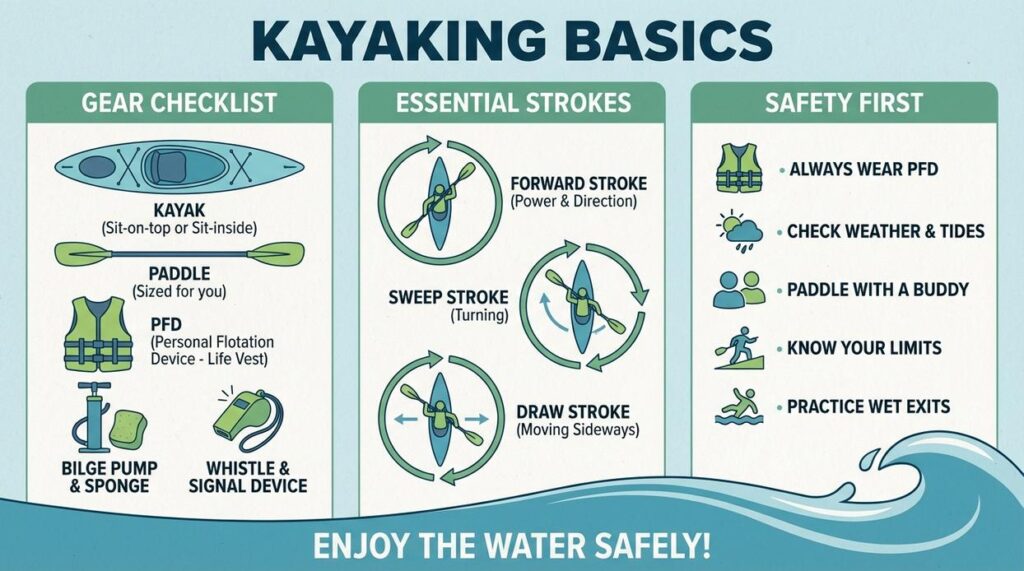
A sit-on-top kayak—an open design where you sit above the hull—is typically more stable and beginner-friendly. A sit-in kayak, where your legs are enclosed, offers better speed and protection in colder water. Some argue sit-in models feel safer because you’re “inside” the boat. I disagree for beginners; ease of exit builds confidence faster.
Essential Kayaking Gear
The non-negotiables: a properly fitted Personal Flotation Device (PFD) (a life jacket designed for paddling), a paddle sized to your height, and a dry bag for valuables. According to the U.S. Coast Guard, drowning was the reported cause of death in 75% of recreational boating fatalities in 2022—and 87% of those victims weren’t wearing life jackets.
First Time on the Water
Start on calm water. Practice forward strokes (power), reverse strokes (braking), and sweep strokes (turning). Think of it as learning the basic dance steps before freestyle.
Safety First
If you capsize, stay with your boat—it floats. Share your float plan, check conditions, and treat kayaking like other outdoor adventure activities: preparation makes the fun possible.
For more trip planning tips, read a complete guide to exploring national parks like a pro.
Stay Safe, Adventure Longer: Universal Outdoor Safety Essentials
The 10 Essentials—navigation, sun protection, insulation, illumination, first aid, fire, repair kit, nutrition, hydration, and emergency shelter—form a universal safety net. They prevent small mistakes from becoming rescues. Next, carry at least half a liter of water per hour of moderate effort, more in heat, and pack calorie-dense snacks like nuts, jerky, and energy bars. Additionally, respect wildlife by storing food securely, keeping distance, and backing away slowly during encounters. For all outdoor adventure activities, choose preparation over bravado. Pro tip: check forecasts and trail reports before you go. Ultimately, smart planning keeps adventures fun and survivable for everyone involved.
You’ve done the research. Now comes the best part: ACTION. When you commit to your first hiking, camping, or kayaking trip, you trade uncertainty for CLARITY and momentum. Instead of feeling overwhelmed, you gain a simple path forward that builds confidence every time you step outside. The benefits are real: better health, sharper focus, and stories worth telling. Start small this weekend:
- Choose one local park
- Pack essential gear
- Review basic safety steps
Each win compounds. Planning creates control. Preparation creates safety. Taking that first step creates POSSIBILITY. Your adventure begins the moment you decide to go.
Ready for Your Next Journey
You came here looking for clarity, inspiration, and practical guidance to plan a trip that’s exciting, meaningful, and safe. Now you have the insights to navigate cultural experiences, organize logistics smoothly, and confidently explore outdoor adventure activities without second-guessing your plans.
Travel planning can feel overwhelming—too many options, not enough reliable advice, and constant safety concerns. But with the right preparation and trusted insights, those pain points turn into anticipation and confidence.
The next step is simple: start mapping out your itinerary, prioritize the experiences that excite you most, and use proven travel tips to avoid costly mistakes. Thousands of smart travelers rely on our expert-backed guidance to plan smoother, safer, and more memorable trips.
Don’t let uncertainty delay your adventure. Start planning today, use these tips to build your perfect itinerary, and turn your travel goals into unforgettable experiences.

 Paul Shoveroller has opinions about cultural destinations and experiences. Informed ones, backed by real experience — but opinions nonetheless, and they doesn't try to disguise them as neutral observation. They thinks a lot of what gets written about Cultural Destinations and Experiences, LWMF Local Adventure Highlights, Hidden Gems is either too cautious to be useful or too confident to be credible, and they's work tends to sit deliberately in the space between those two failure modes.
Reading Paul's pieces, you get the sense of someone who has thought about this stuff seriously and arrived at actual conclusions — not just collected a range of perspectives and declined to pick one. That can be uncomfortable when they lands on something you disagree with. It's also why the writing is worth engaging with. Paul isn't interested in telling people what they want to hear. They is interested in telling them what they actually thinks, with enough reasoning behind it that you can push back if you want to. That kind of intellectual honesty is rarer than it should be.
What Paul is best at is the moment when a familiar topic reveals something unexpected — when the conventional wisdom turns out to be slightly off, or when a small shift in framing changes everything. They finds those moments consistently, which is why they's work tends to generate real discussion rather than just passive agreement.
Paul Shoveroller has opinions about cultural destinations and experiences. Informed ones, backed by real experience — but opinions nonetheless, and they doesn't try to disguise them as neutral observation. They thinks a lot of what gets written about Cultural Destinations and Experiences, LWMF Local Adventure Highlights, Hidden Gems is either too cautious to be useful or too confident to be credible, and they's work tends to sit deliberately in the space between those two failure modes.
Reading Paul's pieces, you get the sense of someone who has thought about this stuff seriously and arrived at actual conclusions — not just collected a range of perspectives and declined to pick one. That can be uncomfortable when they lands on something you disagree with. It's also why the writing is worth engaging with. Paul isn't interested in telling people what they want to hear. They is interested in telling them what they actually thinks, with enough reasoning behind it that you can push back if you want to. That kind of intellectual honesty is rarer than it should be.
What Paul is best at is the moment when a familiar topic reveals something unexpected — when the conventional wisdom turns out to be slightly off, or when a small shift in framing changes everything. They finds those moments consistently, which is why they's work tends to generate real discussion rather than just passive agreement.