

Planning a trip to a national park should feel exciting—not overwhelming. If you’re searching for a clear, reliable national park travel guide, you likely want practical tips, must-see highlights, safety advice, and insider insights that help you make the most of your time outdoors. This article is designed to do exactly that.
We break down everything you need to know before you go: the best times to visit, essential packing tips, how to avoid crowds, local cultural insights, and smart safety essentials that many travelers overlook. Whether you’re heading out for a weekend adventure or a longer exploration, you’ll find straightforward guidance tailored to real-world travel needs.
Our recommendations are built on extensive destination research, up-to-date park regulations, and insights gathered from experienced travelers and local experts. The goal is simple: give you accurate, actionable information so you can explore confidently, experience more, and create unforgettable memories in some of the world’s most remarkable natural landscapes.
Your Adventure Awaits: A Practical Framework for National Park Exploration
First, start with research. A reliable national park travel guide outlines terrain types, elevation changes, permit requirements, and seasonal weather patterns—details that directly impact your safety and comfort. For example, afternoon thunderstorms are common in Rocky Mountain National Park (National Park Service), so early hikes reduce lightning risk.
Next, prepare strategically. Pack layered clothing, carry at least one liter of water per two hours of hiking, and review wildlife protocols (yes, bear spray matters in grizzly country).
Finally, practice awareness. Stay on marked trails, monitor forecasts, and respect closures. Preparation transforms uncertainty into confidence—and confidence makes adventure unforgettable.
Before you lace up your boots, start with research and reservations. First, choose a park that matches your skill level and the season. High alpine routes in October demand different preparation than desert trails in July. Next, book lodging, campsites, and high-demand permits months ahead—think Half Dome or Angels Landing. These spots fill quickly, and spontaneity rarely wins here.
Just as important, follow the “Know Before You Go” protocol. A week out—and again the night before—check the official NPS website for alerts, road closures, trail conditions, and fire restrictions. Conditions change fast. A clear trail can close after one storm. Make this a non‑negotiable step in your national park travel guide routine.
Gear is not optional; it is your safety net. Pack the Ten Essentials: navigation (paper maps and offline GPS), sun protection, insulation layers, illumination, a first-aid kit, fire starters, a repair kit, extra nutrition, ample hydration, and emergency shelter. Pro tip: download maps offline in case service disappears at the trailhead.
Finally, create and share your itinerary. Leave detailed plans with someone not on the trip. Include trail names, expected start and end times, permit details, vehicle description, and a firm check-in deadline. If you miss it, they should know who to call.
In short, plan thoroughly, double-check everything, and never assume the park will “figure itself out.” It won’t. Preparation may feel excessive, yet it transforms uncertainty into confidence and turns potential mishaps into manageable moments you are fully equipped to handle on any wilderness adventure ahead.
Staying Safe on the Trail: Navigation, Hydration, and First Aid
Navigation Mastery
Relying only on your phone is like trusting one cast member to carry the entire Avengers team (bold, but risky). Batteries die. Signals fade. A physical map— a scaled paper representation of terrain— and a compass, which uses Earth’s magnetic field to show direction, are your backup brain. Pair them with a GPS app that has downloaded offline maps for redundancy.
Learn to read trail markers: blazes (paint marks on trees), cairns (stacked rocks), and signposts. If you lose the trail, use S.T.O.P.: Stop moving, Think about your last known point, Observe landmarks and terrain, Plan your next move. Panicking wastes energy and daylight.
Some argue modern GPS makes old-school navigation obsolete. Maybe—for now. But as parks limit cell infrastructure and tech failures increase, I predict traditional skills will become essential again, especially in remote areas.
Hydration and Nutrition Strategy
“Drink water” isn’t a strategy. Plan about half a liter per hour of moderate hiking, more in heat or with steep elevation gain (CDC guidance supports increased intake during exertion). Add electrolytes—minerals like sodium and potassium—to prevent hyponatremia, a dangerous dilution of blood sodium (Mayo Clinic).
Pack high-energy snacks: complex carbs and fats help prevent “bonking,” the sudden crash when glycogen stores run dry. (Think less sad granola crumb, more steady fuel.)
Basic Wilderness First Aid
Common injuries include blisters, sprains, dehydration, and cuts. Carry blister pads, elastic wrap, antiseptic wipes, gauze, tape, and pain relievers. Clean wounds, compress sprains, rest dehydrated hikers in shade, and monitor symptoms.
Every national park travel guide should emphasize this: preparation prevents rescue headlines. Before heading out—or planning easier adventures like top coastal road trips for scenic ocean views—build safety into the itinerary.
Respecting the Wild: Wildlife Encounters and Environmental Stewardship
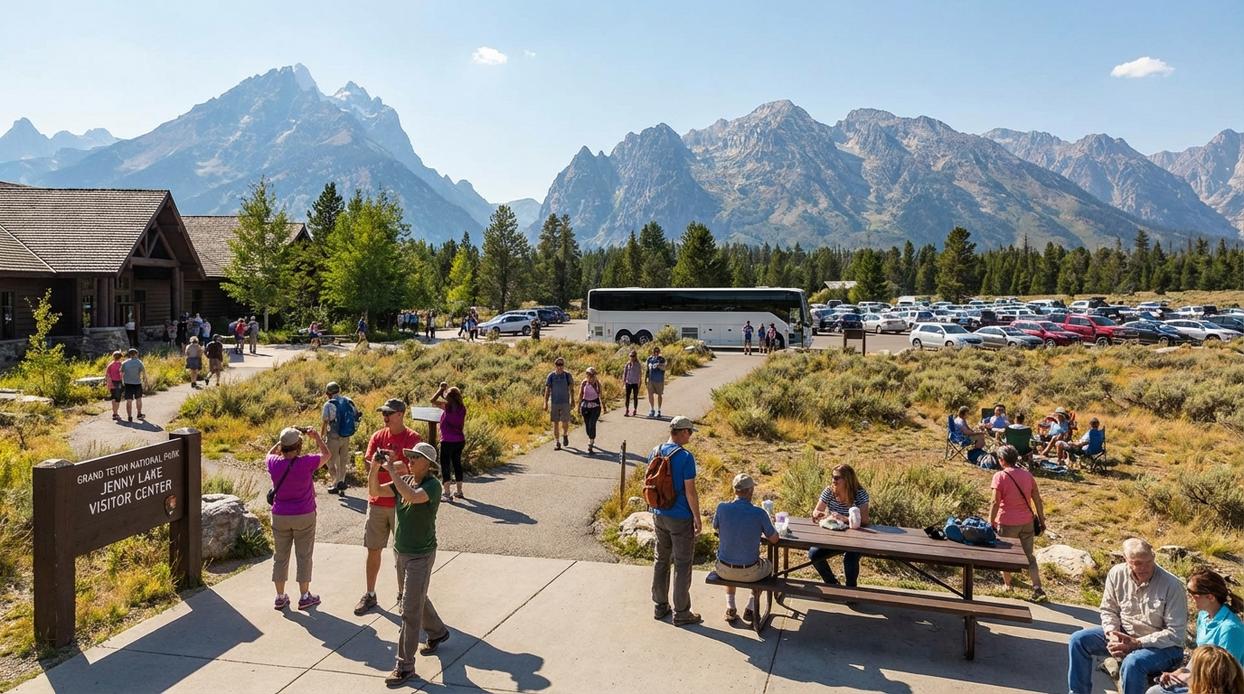
The first time I saw a bull moose on a trail in Wyoming, I froze. He didn’t charge. He didn’t even move. But the sheer size of him made one thing clear: I was the visitor. That moment reshaped how I approach every park since.
Wildlife Safety Protocols
For large animals like bears, moose, and bison, remember:
- Know the distance (at least 100 yards for bears and wolves; 25 yards for others, per National Park Service guidelines).
- Never feed wildlife (it conditions animals to approach humans—often ending badly for them).
- Make noise in bear country to avoid surprise encounters.
Store food in bear-proof containers or locked vehicles. Proper food storage prevents animals from associating campsites with snacks (and yes, they can smell toothpaste).
The “Small Dangers”
Ticks, mosquitoes, and venomous snakes deserve respect too. Use EPA-approved repellents with DEET or picaridin (CDC recommendation), wear long sleeves, and check for ticks after hikes. If bitten, clean the area and seek medical advice when symptoms appear.
Leave No Trace Principles
The seven principles boil down to this: plan ahead, stay on trails, dispose of waste properly, leave what you find, minimize campfire impact, respect wildlife, and be considerate of others. Packing out everything you pack in isn’t just polite—it’s protection.
For deeper prep, consult a reliable national park travel guide before your trip.
Beyond the Main Trail: Finding Unique Park Experiences
Think of a park like a layered novel. The trails are the plot, but the footnotes hold the secrets. Ranger-Led Programs are your live commentary track—free talks, guided walks, and stargazing nights that decode geology and wildlife in plain English. Cultural sites work like time machines. Petroglyphs, historic lodges, and visitor centers reveal the human chapters. Even your national park travel guide is just the table of contents. Step outside the gates for flavor:
- A post-hike meal at a beloved diner.
- A small-town museum with quirky treasures.
Ask locals for hidden gems.
Leave Only Footprints: Your Journey Begins Now
You now have the complete toolkit to explore our national parks safely and confidently. Remember, the difference between a trip of a lifetime and a disaster is preparation. Therefore, follow this framework:
- Plan ahead using a trusted national park travel guide.
- Practice on-trail awareness and monitor weather, wildlife, and your limits.
- Respect the environment by packing out waste and staying on marked paths.
In other words, preparation protects your adventure (and pride).
Pro tip: download offline maps before you go.
Now, pick a park, open its website, and start today.
Ready to Plan Your Next Adventure?
You came here looking for clarity, confidence, and practical insights to make your park experience unforgettable — and now you have it. From planning essentials to safety tips and cultural highlights, you’re better prepared to explore with purpose instead of guesswork.
Travelers often feel overwhelmed trying to organize the perfect outdoor escape — missing key details, underestimating logistics, or worrying about safety. With the right national park travel guide, that stress disappears and gets replaced with excitement, preparation, and confidence.
Now it’s time to take the next step. Start mapping out your itinerary, lock in your travel dates, and use this guide to avoid common mistakes that cost time and money. Thousands of adventurers rely on our expertly curated travel insights to simplify planning and elevate their experiences.
Don’t let uncertainty delay your next great adventure. Dive into your planning today and turn inspiration into a well-prepared, unforgettable journey.

 Paul Shoveroller has opinions about cultural destinations and experiences. Informed ones, backed by real experience — but opinions nonetheless, and they doesn't try to disguise them as neutral observation. They thinks a lot of what gets written about Cultural Destinations and Experiences, LWMF Local Adventure Highlights, Hidden Gems is either too cautious to be useful or too confident to be credible, and they's work tends to sit deliberately in the space between those two failure modes.
Reading Paul's pieces, you get the sense of someone who has thought about this stuff seriously and arrived at actual conclusions — not just collected a range of perspectives and declined to pick one. That can be uncomfortable when they lands on something you disagree with. It's also why the writing is worth engaging with. Paul isn't interested in telling people what they want to hear. They is interested in telling them what they actually thinks, with enough reasoning behind it that you can push back if you want to. That kind of intellectual honesty is rarer than it should be.
What Paul is best at is the moment when a familiar topic reveals something unexpected — when the conventional wisdom turns out to be slightly off, or when a small shift in framing changes everything. They finds those moments consistently, which is why they's work tends to generate real discussion rather than just passive agreement.
Paul Shoveroller has opinions about cultural destinations and experiences. Informed ones, backed by real experience — but opinions nonetheless, and they doesn't try to disguise them as neutral observation. They thinks a lot of what gets written about Cultural Destinations and Experiences, LWMF Local Adventure Highlights, Hidden Gems is either too cautious to be useful or too confident to be credible, and they's work tends to sit deliberately in the space between those two failure modes.
Reading Paul's pieces, you get the sense of someone who has thought about this stuff seriously and arrived at actual conclusions — not just collected a range of perspectives and declined to pick one. That can be uncomfortable when they lands on something you disagree with. It's also why the writing is worth engaging with. Paul isn't interested in telling people what they want to hear. They is interested in telling them what they actually thinks, with enough reasoning behind it that you can push back if you want to. That kind of intellectual honesty is rarer than it should be.
What Paul is best at is the moment when a familiar topic reveals something unexpected — when the conventional wisdom turns out to be slightly off, or when a small shift in framing changes everything. They finds those moments consistently, which is why they's work tends to generate real discussion rather than just passive agreement.